RIP Medical Debt helps poor Americans eliminate medical bills
Jun. thirty, 2020


Over  decades of working low-paying jobs, with no wellness insurance benefits, Dreama Shaeffer—like thousands of other Americans—found herself early this year with thousands of dollars of medical bills she was unable to pay.
A 54-yr-old single mom, Shaeffer had bills that stemmed from injuries her at present grown son suffered as a child; from doctors appointments to treat her early-onset osteoporosis; from a 3-year-old emergency in which she stopped breathing and had to get an ambulance to the infirmary.
Every calendar month for years, bills arrived; she paid a few dollars here and in that location, only generally, she glanced at them anxiously and put them bated. "I'm paycheck to paycheck, and don't accept coin for extra bills," Shaeffer says. "It's not like I'm a bad person. I but don't make a lot."
 1 day terminal February, Shaeffer's mail included something that she most threw away because information technology looked a lot like junk, in a bright xanthous envelope. Inside, though, was nothing brusque of a miracle: A letter, from the New York-based nonprofit RIP Medical Debt, alerting Shaeffer that $1,000 of her debt had been wiped out. Just like that.
"I happened to go that letter two weeks after I ran from an abusive relationship," says Shaeffer. "I literally started crying. It was the best thing that happened to me in a long time."
In the final 5 years, RIP Medical Debt has zeroed out over $2 billion in medical bills averaging about $1,200 each, for more than 650,000 families; they are aiming to hitting $three billion by the end of 2020.
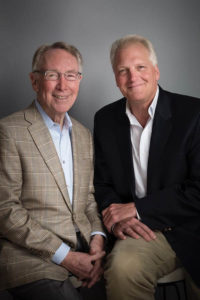
That twenty-four hours, Shaeffer joined thousands of other Americans in all 50 states who have had their hospital bills wiped make clean by RIP Medical Debt, a nonprofit started by ii former debt collectors, Craig Antico and Jerry Ashton, in 2015. In the last v years, using small and large donations, Antico and Ashton have zeroed out over $two billion in medical bills averaging virtually $1,200 each, for more than 650,000 families; they are aiming to hit $iii billion past the stop of 2020.
They exercise information technology by adapting the same method they used as bill collectors throughout their careers: They pay hospitals a fraction of what's owed for a bundle of unpaid bills. And then, rather than collecting the money from patients, as they used to exercise, they forgive the debt. "We became," Ashton says, "predatory givers."
And, Antico adds, "I'm happier than I've ever been."
All beyond America, in that location is some $300 billion in medical bills that are outstanding and tin can't be paid, according to Antico. Much of that is at hospitals, which are willing to sell off the debt in majority at a discounted rate to collections agencies in club to compensate at least some of their money; even a fraction of something is better than aught, after all. This discounted charge per unit is non available to consumers considering, for example, a $100 payment on a $10,000 bill would not be worth it to a hospital. But RIP Medical Debt buys in majority, at a minimum of $10,000 per transaction—a threshold that just satisfies hospital accountants. That allows for huge debt relief: Every $1 the company pays is worth $100 in coin owed.
That is peculiarly proficient news for patients who take their debts forgiven merely by virtue of existence in the group of bills RIP Medical Debt bought from a medical provider. They don't take to apply. To qualify all they demand is to owe money; be two times beneath the poverty rate; take avails worth less than their debt; or have a hardship such as paying 5 pct of annual income for out of pocket expenses
Those qualifications use to far too many Americans. According to a 2022 New York Times/Kaiser Family unit Foundation survey , i in four Americans struggled to pay a contempo medical neb. A more contempo survey puts that number even higher—at one in three Americans, or 137 million people. In the Philadelphia area lonely, according to an NBC10 report two years ago, ane.one million people owe $631 million in medical debt.
 A third of Americans put off medical intendance because they are afraid of the toll—which can lead to more serious health problems, and steeper bills, later. Healthcare bills are the primary reason Americans consider taking money from retirement, or filing for bankruptcy . And, of course, the poorest Americans—those in poverty, or who may non even have a couple hundred dollars on manus for emergencies—are the hardest hitting past healthcare costs.
The consequences become across just fiscal. The burden of debt causes anxiety, shame and the sort of absurd choices that come to define a household—health intendance bill or medicine, food, rent. "Information technology's stressful, at that place'south a stigma attached to it, and the bills are then high we tin can't fifty-fifty await people to pay it," Antico notes.
Antico and Ashton both spent their careers as debt collectors, in an industry where more than fifty percent of all debt is medical. Ashton worked in the field for almost 40 years, mostly helping doctors' offices collect on their bills. "I always felt that we were the guys with the white hats," he says. "These doctors were small concern owners, who needed to be paid so they could pay their ain bills."
 It wasn't until Occupy Wall Street that Ashton and Antico, who by that point had worked together for about half-dozen years, became "enlightened" about the financial disparity effectually them—and of how their work was feeding into that. "I didn't realize until then how much destruction the debt was causing," Antico says.
"The storyline was righting wrongs, showing the financial disparity and horridness of that, that it had to change," Ashton recalls. "Craig and I looked at each other and idea, this is a good place to start."
Ashton prepare about reconfiguring the software he used to collect debts to pinpoint those most in need and instead transport them forgiveness letters. They launched with their ain money and money from a founding lath member, Robert Goff. Now, many of their buyouts come from crowdfunding efforts at churches and other customs groups that RIP Medical Debt helps to run.
"It takes communities to make this happen," says Antico. "It'due south something people can exercise, and information technology galvanizes them every place we've gone."
In Cincinnati, for example, the megachurch Crossroads recently raised money from its congregation to wipe out more than $46 million in medical debt for 45,000 people in Ohio, Kentucky and several other areas. NBC/Telemundo ran a campaign at stations around the country in 2022 that targeted almost $631 million in medical debt—including in the Philadelphia region, where the station eliminated more than $ii million owed past local patients.
"It takes communities to make this happen," says Antico. "It'due south something people can do, and it galvanizes them every identify nosotros've gone."
RIP Medical Debt has several open campaigns from all over the country and also operates a general fund to which donors tin contribute, and which Antico and Ashton use to target certain areas or populations: Houston after Hurrican e Harvey, first responders and, now, areas and people hitting hardest by Covid-19.
And they want to do more: They've launched two research projects to help determine the way they can be virtually effective moving forwards; they wrote a volume with Goff chosen Finish Medical Debt: Curing America'south $i Trillion Unpayable Healthcare Debt , which unpacks the myriad problems with and solutions to the American healthcare system; and, along with academics from University of Chicago, UCLA, Berkeley and MIT, they join activists, debt collectors, government officials, nonprofits and hospitals for an annual Economic Bear on Summit to accost the same issues.
"We meet our role as bigger than buying debt and forgiving it—that's like sweeping upward later the parade," says Ashton. "This is a social challenge because the system is broken—information technology'south not even a organization. All these players have a function in making us get well. What'southward not been function of this is addressing financial bear on and cost."
This is—in instance y'all didn't already realize it—a uniquely American problem. Our $3.5 billion healthcare industry is the most expensive in the earth, made upwards of uneven costs, a patchwork of insurance plans and a inexplainable array of holes that go out millions of people with burdensome debt just for trying to get well.
Penn Law Schoolhouse Professor Allison Hoffman, who specializes in healthcare financing, says this is for three particular reasons:
-
- Despite the Affordable Intendance Act, about ten percent of Americans under 65 are nevertheless uninsured, so have to pay out of pocket for every medical expense—often when they end up at the Emergency Room for bug they didn't or couldn't accost at a doctor'southward office. "That's the most unsafe and unprotected category," Hoffman says.
- Thousands of Americans are under-insured. Fifty-fifty with their coverage, they could end upward paying a large share of costs, either because they accept a deductible as loftier as $5,000 a year—unaffordable for many—or considering their plan requires they pay a share of the cost, sometimes 20 percent of the bill.
- Patients face "surprise medical bills" considering they have unwittingly concluded upward with a doctor who is not in their insurance network. Even Hoffman faced this recently on the verge of surgery. During a pre-operative engagement on Friday for a procedure the following Mon, she was alerted that the anesthesiologist would be out of network. "I had to decide that day, Do I do this, or not?" Hoffman says, noting that it is not necessarily the norm to even go that information. "I could have ended upwards with the full toll of that without even knowing it."
Plus, there's the incredible fact that hospitals have lower negotiated rates for those with insurance than those without—so people who already tin can't afford insurance are hit with bills sometimes magnitudes higher than those with insurance. "It'due south not rich people who are uninsured," Hoffman notes. And even negotiated rates are inflated compared to the cost of healthcare around the world.
"In other countries, there's a more rational mode of pricing healthcare," she says. "There, if you lot're left with a pecker, yous tin pay for it. Here, y'all can't."
This systemic trouble will not exist solved by RIP Medical Debt—at least not alone. But the lesson, for and from Ashton and Antico, is that they are not solitary in this. They are just one part of a solution making life a little easier for hundreds of thousands of people.
"Nosotros're proof that if you can change one person's mind, they can leave and do magnificent things," Ashton says. "It doesn't have to be us vs. them. We just need cardinal people to make change."
The Citizen is i of 20 news organizations producing Broke In Philly, a collaborative reporting project on solutions to poverty and they metropolis's button towards economical justice. Follow the proect @brokeinphilly.

Source: https://thephiladelphiacitizen.org/iwss-rip-medical-debt/
0 Response to "RIP Medical Debt helps poor Americans eliminate medical bills"
Post a Comment